
Area Guide
West, central or east: which part of the Costa del Sol suits you?
9 June 2026 · 6 min read
Reviewed by Thomas Kjærrgård
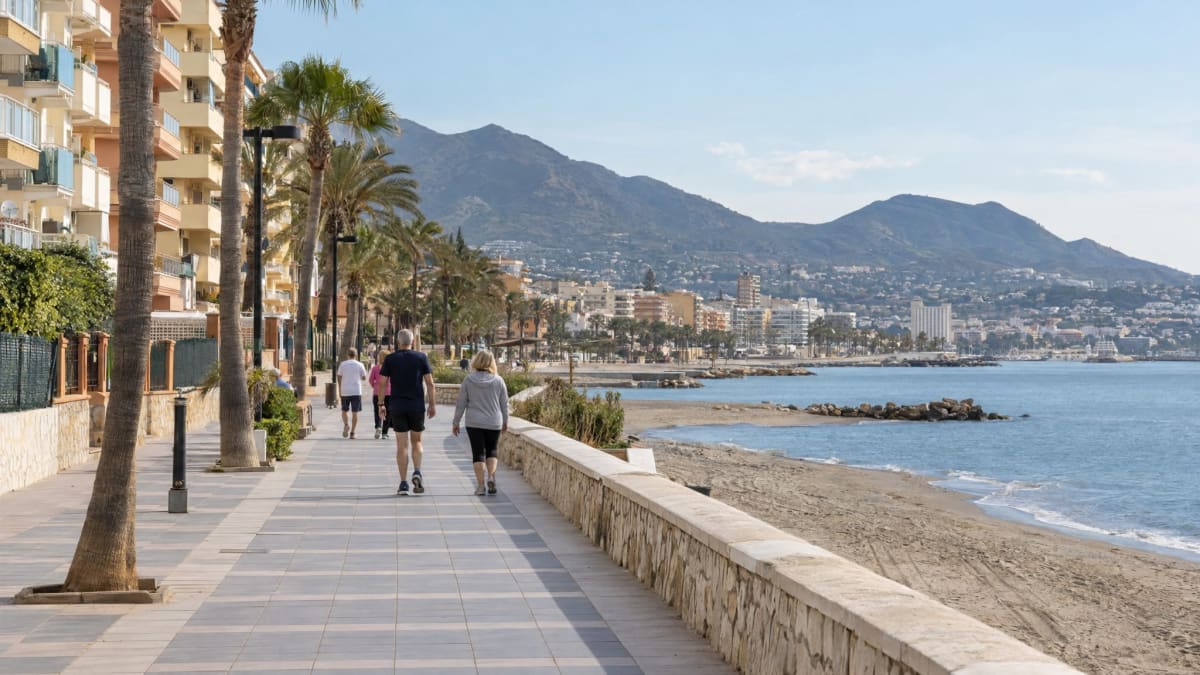
You hear Estepona, Fuengirola and Nerja mentioned as if they were neighbouring districts. In practice, choosing between them means choosing different daily routines: how often you drive, whether you can walk beside the sea after shopping, and how far you travel when flying back to Scandinavia. A simple mental map helps. Solkysten groups the coast into three stretches, west, central and east, each with a different balance of town life, beaches and hills.
How the coast fits together
Your ordinary day here can revolve around a promenade, a town centre or a residential area in the hills. That distinction matters as much as the town name. Many municipalities reach inland from the sea, so two homes within the same municipality can offer quite different routines. Mijas, for example, includes both a hillside village and the coastal settlement of La Cala de Mijas. Picture Málaga city as your reference point, with the airport nearby. In our west stretch, the map runs from Sotogrande through Manilva, Casares and Estepona to Benahavís. Central continues through Marbella and the towns towards Torremolinos, including inland Ojén and Mijas. East begins with Málaga city and follows the coast towards Nerja, taking in inland villages too. These are Solkysten’s search areas: Sotogrande itself belongs to San Roque in Cádiz, just beyond Málaga province.

West: more space between places
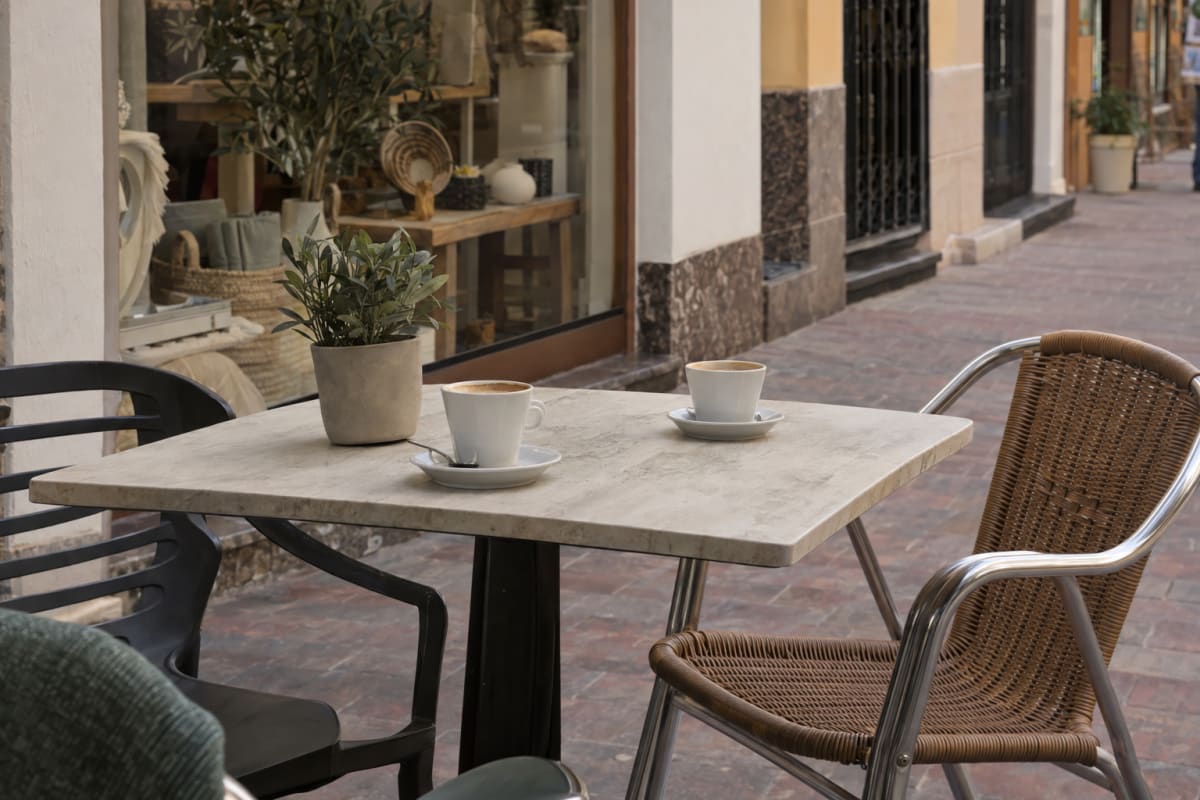
In the west, you can choose between quiet inland villages, residential developments and towns beside the sea. Sotogrande grew around golf and combines residential areas with sporting facilities and waterfront apartments. Manilva gives you another choice within one municipality: the inland village has quiet whitewashed streets, while Sabinillas has a seafront promenade and Puerto de La Duquesa has restaurants and bars. The difference between beach and hills is especially clear in Casares. Its white village sits about 435 metres above sea level, while the municipality also has a coastal beach area. Estepona brings beaches including La Rada, as well as residential areas and golf courses. Benahavís is a mountain village about seven kilometres from the beach, surrounded by a largely forested municipality that also contains residential developments. This stretch gives you several ways to build a routine around golf, the hills or the sea. The trade-off for a more spread-out residential setting is more driving, alongside a longer airport journey this far west: Estepona is about 80 kilometres from Málaga Airport, and Sabinillas farther still. For a winter home, the useful distinction to keep in mind is between a town-centred routine and life in a residential development.
Central: promenades, town life and the airport train
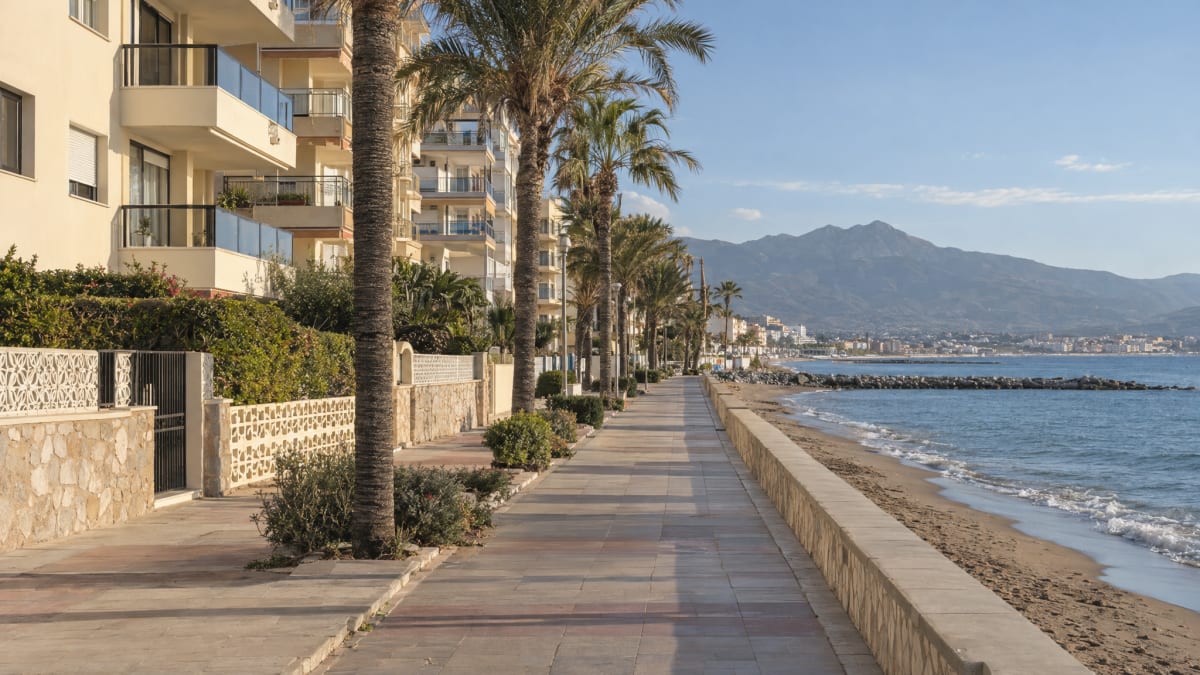
If you want a seafront walk to be part of an ordinary weekday, central gives you several places to start. Here you find established towns and long promenades, with Fuengirola offering a year-round town routine. Winter walks by the sea sit alongside local shops, restaurants, theatre, exhibitions and concerts. Torremolinos combines its promenade with beach restaurants and beaches including La Carihuela and El Bajondillo. Benalmádena is easier to understand as three places within one municipality. Benalmádena Pueblo sits on the mountainside, Arroyo de la Miel is its shopping and business centre, and Benalmádena Costa has the promenade and marina. Mijas has a similar coast-and-hills distinction: Mijas Pueblo is inland from Fuengirola, while La Cala de Mijas is on the coast. Your preferred setting can therefore narrow the search more usefully than the municipal name alone. Marbella combines a pedestrian old town, a long seafront promenade, golf and marinas. Within it, Nueva Andalucía includes the permanent residential centre of La Campana and lower-density neighbourhoods around golf courses. Central does not mean uniformly compact: parts of Marbella are spread out and car-oriented. For a different daily setting, Ojén lies about eight kilometres northeast of Marbella, surrounded by mountains and with no coastline. The strongest transport distinction is the C1 local train between Fuengirola, Málaga Airport and Málaga city. The airport journey takes approximately 34 minutes from Fuengirola and 18 minutes from Benalmádena. This makes the rail corridor worth considering if you want to use a car less often. Marbella sits beyond that corridor, about 52 kilometres from the airport, so it offers a different travel routine despite belonging to the same central stretch.
East: city routines, smaller towns and hills close to the sea
In Málaga, your day can combine city errands with museums, the historic centre or a walk beside the sea. It is the urban starting point of our east stretch, rather than a smaller coastal town. The airport train takes approximately 12 minutes to the city centre. Farther east, the balance shifts towards smaller towns, agricultural land and mountains close to the coast. Rincón de la Victoria is the gateway to the Axarquía, about 31 kilometres from the airport. Farther along, Vélez-Málaga has its main town slightly inland and Torre del Mar on the coast. Algarrobo also has both an inland settlement and Algarrobo Costa. These pairings are useful when you are deciding whether your daily walk should take you through village streets or towards the beach. Sayalonga belongs to the inland side of this landscape, with an annual festival celebrating loquats. Torrox has its Fiesta de las Migas just before Christmas, while its coastal restaurants and chiringuitos serve sardine skewers. Nerja adds beaches, nearby cliffs and mountain walking, as well as winter events such as Carnival. The east includes both city life and rural surroundings. Beyond Málaga, the airport train no longer follows your route, so allow for road travel; Nerja is about 70 kilometres from the airport. To choose between west, central and east, picture a week rather than a holiday. Decide whether you want to walk to everyday services, live beside the beach or in the hills, and how much driving fits your life. With those priorities clear, narrow your search to two or three towns and try your everyday routine in each, during winter if that is when you plan to stay.


Stay informed on the Costa del Sol
Subscribe to get the latest posts sent to your email
By subscribing, you agree to receive Solkysten’s newsletter by email. You can unsubscribe at any time using the link in each email. How we use your information