
Lifestyle
From the market stall to a late lunch: everyday food on the Costa del Sol
5 November 2026 · 5 min read
Reviewed by Thomas Kjærrgård
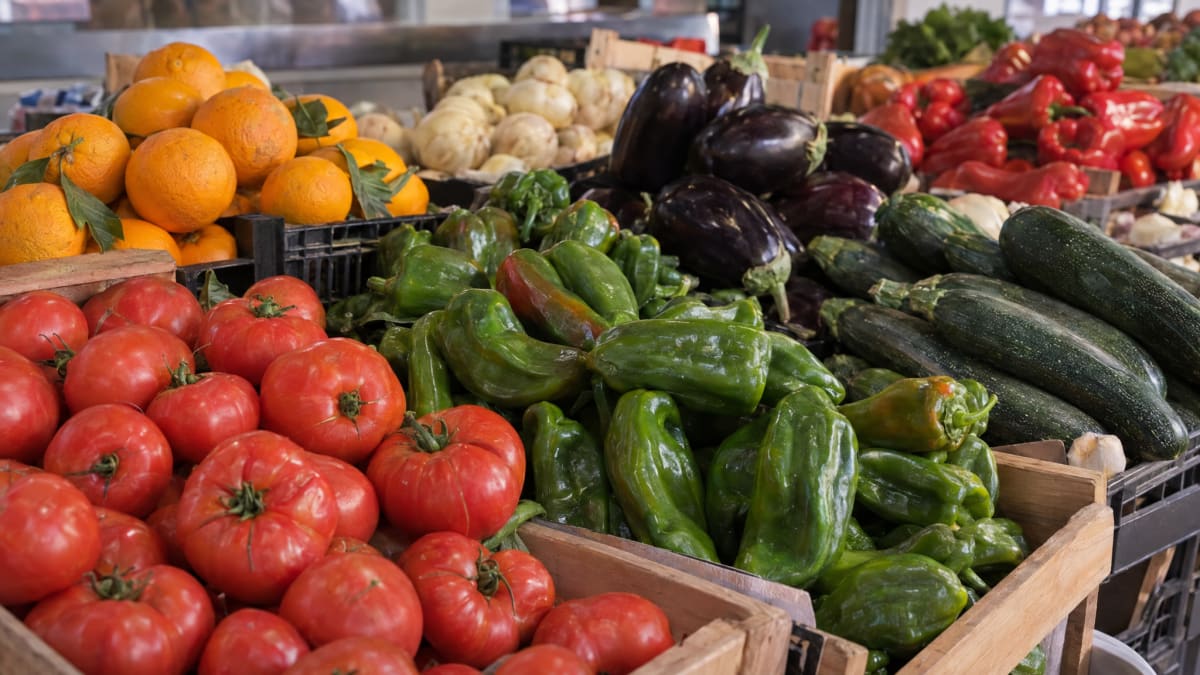
A morning at the market, olive oil on your breakfast bread and lunch at two: settling into food life on the Costa del Sol starts with a few ordinary habits. When you spend part of the year here, the useful discoveries are places you can return to, ingredients you recognise and meal times that fit your day. Start with a municipal food market, give the weekly street market its own place in your diary, and let local produce shape what you cook and order.
Make the municipal food market part of your morning
At Mercado de Atarazanas in central Málaga, you can shop for fruit, vegetables, fish and meat, then stay for something to eat at the bars, tapas stalls or outdoor terraces. That combination makes it useful both for stocking your kitchen and for a morning out. It is about five minutes on foot from Plaza de la Marina and ten minutes from Málaga Cathedral, so you can comfortably make the market the starting point for other errands. Atarazanas opens Monday to Saturday, from 08:00 to 15:00. The practical trade-off is timing: if you leave your food shopping until after a Spanish lunch, you will miss its opening hours. Give it a morning slot instead, with time to look at the counters before deciding what to cook. If your home is farther west, Marbella has three municipal food markets: Central, Divina Pastora and San Pedro Alcántara. Choose the one that fits your ordinary route rather than making every shop an excursion to Málaga. A useful first visit is a modest one: buy ingredients for one meal, see how the market fits your day and build your routine from there.


Put the weekly street market on the right day
The weekly street market gives your week a fixed outing alongside the municipal food shop. Around Marbella, you can build that outing around four different days: Marbella on Monday, San Pedro Alcántara on Thursday, Las Chapas on Friday and Nueva Andalucía on Saturday. These are the municipal weekly street markets, distinct from the three food markets. For a part-year stay, one regular market day is a manageable starting point. If you are based near San Pedro Alcántara, for example, Thursday can become your browsing morning; near Nueva Andalucía, Saturday may fit better. There is little need to turn an ordinary week into a circuit of all four. Before your first trip, check the current municipal schedule. Then keep the day in your diary and plan the rest of your shopping around it. Familiarity is the point: knowing when to go makes a market easier to use as part of life here, rather than treating it as an occasional holiday visit.
Choose local fish, fruit, oil and wine
At the table, one of the coast’s most recognisable preparations is the espeto: sardines threaded onto a cane and roasted slowly beside embers. You can find espetos throughout the year, but May, June, July and August are the recommended months for the sardines’ fat content and flavour. For a summer lunch at a beachside chiringuito, that gives you a straightforward seasonal choice. Pescaíto frito, fried fish and seafood, is another coastal staple, with boquerones, jureles, salmonetes, calamares, chopitos and pijotas among the varieties used. For your kitchen, look beyond the shoreline. The Axarquía grows mangoes and avocados, as well as chirimoyas and papayas. Ask the stallholder which locally grown fruit is coming in now, and use that answer to guide your shopping. Olive oil from the Antequera designation of origin, principally associated with the Hojiblanca variety, has an everyday place at the table: on a breakfast mollete, over salad or in cooked vegetables and cereals. Wine and raisins offer another way to recognise the province on a label. Málaga and Sierras de Málaga are separate protected designations of origin. Málaga is associated with liqueur wines and naturally sweet wines. Pasas de Málaga is a third protected designation, covering raisins made from ripe Moscatel de Málaga grapes, also called Moscatel de Alejandría, sun-dried in the Axarquía or the Manilva subzone. Sabor a Málaga is a provincial food promotion label worth getting to know. Its fairs bring together products such as extra-virgin olive oil, wines, goat cheeses, olives, honey and subtropical fruit. For an ordinary week, use those foods as building blocks rather than souvenirs: oil for breakfast and cooking, fruit for the kitchen counter, and raisins or cheese for the table.
Let lunch set the pace of your week
A market morning fits naturally with a later lunch. General Spanish meal times are breakfast from 07:30 to 08:30, lunch from 14:00 to 15:30 and dinner from 21:00 to 22:00, with variation between households and days of the week. You need not change every habit at once. Moving lunch later on the days you eat out is a simple place to start. A menú del día gives lunch a clear structure: two courses chosen from a set selection, with bread, a drink, and dessert or coffee. Eating a la carta means choosing individual dishes from the menu. Before a meal, you might have an aperitivo in a bar or restaurant; tapa, banderilla, pincho and ración are terms that vary with portion size, presentation or origin. They give you different ways to order around your appetite. Put the pieces together gently. Make one morning your municipal food shop, keep a weekly street-market day free for browsing, and leave room for a menú del día or, in summer, a sardine lunch by the sea. Cook with what you bring home on the other days. On your next stay, begin with one market visit and one unhurried lunch, then decide which parts you want to repeat each week.


Stay informed on the Costa del Sol
Subscribe to get the latest posts sent to your email
By subscribing, you agree to receive Solkysten’s newsletter by email. You can unsubscribe at any time using the link in each email. How we use your information