
Area Guide
Marbella, Estepona, Fuengirola or Benalmádena: four different ways to live on the coast
7 July 2026 · 6 min read
Reviewed by Thomas Kjærrgård

Your morning walk and your journey home from the airport can tell you more than a town’s reputation. Marbella stretches across several distinct centres; Estepona brings its old streets close to the sea; Fuengirola connects town life with the coastal railway; and Benalmádena offers quite different routines in its village, everyday urban centre and coastal neighbourhoods. If you are deciding where to buy on the Costa del Sol, the useful comparison is how each would fit an ordinary week, including the months when you are not on holiday.
Marbella: several centres along an extended coastline
Living in Marbella can mean spending time among the old town’s historic streets, visiting the Museo del Grabado Español Contemporáneo or walking beside the boats at Puerto Deportivo de Marbella. But central Marbella is only one version of life here. San Pedro Alcántara has its own dense urban centre, while La Campana is home to much of Nueva Andalucía’s permanent population. The municipality’s population changes considerably through the year, so its residential centres are a useful starting point if you want more than a holiday setting. The layout matters as much as the town name. San Pedro Alcántara occupies the western side of the municipality. Nueva Andalucía lies between the Verde and Guadaiza rivers, with residential developments around Los Naranjos, Las Brisas and Aloha golf courses. Puerto Banús concentrates commercial and leisure activity. Nagüeles and the Milla de Oro have more dispersed, low-density development, with steep ground in parts of Nagüeles and limited connections between some residential areas. Your choice is therefore between quite different neighbourhood patterns, rather than variations on one compact centre. The same scale applies at the water. Marbella has about 27 kilometres of coastline, more than 20 beaches and a coastal path extending over 20 kilometres. The beach and coastal walk can be part of your routine, but which stretch you use will depend on where you live. Marbella may suit you if you value a choice of distinct residential settings and want to choose your local centre as carefully as your home. For Málaga airport, there is a direct Avanza bus connection with Marbella’s bus station, or you can travel by car. The C-1 coastal railway ends at Fuengirola. If you expect to use the airport bus regularly, check the connection between your prospective neighbourhood and Marbella’s bus station, along with the current Avanza timetable.

Estepona: old-town streets close to the beach
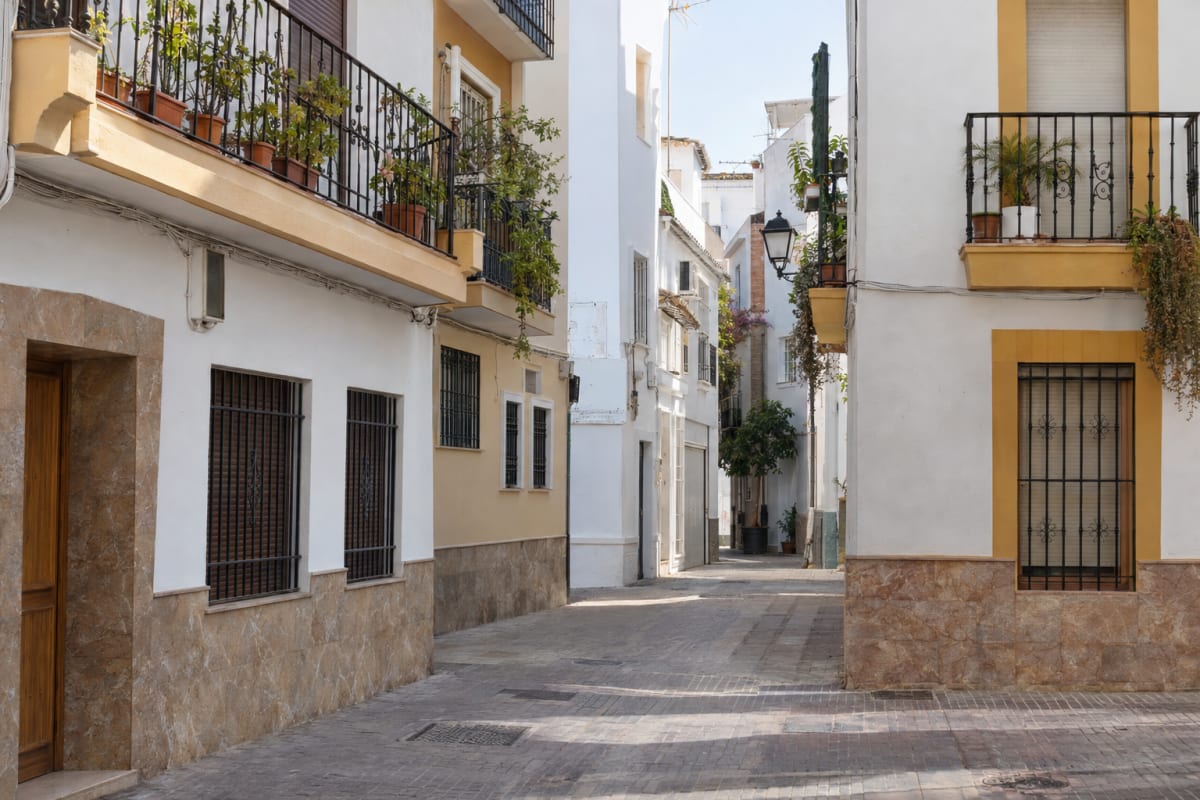
Living in Estepona puts the relationship between the town and the sea at the centre of the decision. Its old town has more than 130 pedestrian or reduced-traffic streets, with flowerpot-decorated houses and small squares just a short distance from the water. You can stop for tapas around Plaza de las Flores or visit an exhibition at Casa de las Tejerinas. The calendar also reaches beyond summer, with Carnival in February and the cultural, sporting and food events of Estepona Vive Sus Calles in March. La Rada lies close to the main streets, and its promenade runs for nearly three kilometres towards the fishing port, connecting with the Senda Litoral. A landscaped pedestrian boulevard with a cycle lane extends from Calle Terraza to Punta Doncella lighthouse. Along this waterfront part of town, Mirador del Carmen adds a library, music conservatory, auditorium and exhibition space to the beach routine. Summer brings additional leisure activity along La Rada’s promenade. Beyond the central streets, the marina and residential urbanisations offer other settings, with restaurants and bars spread among them. Behind the coast, the municipality reaches towards the mountains, with walking destinations including Sierra Bermeja and Paseo de los Pinsapos. Estepona may suit you if you like the idea of a base close to both old-town streets and the beach, with mountain outings as a separate part of your week. A home in an outlying development will give you a different relationship with that centre. For Málaga airport, you have an Avanza bus connection or travel by car, rather than a direct coastal train. Check the current bus route and timetable against the location of the home you are considering. That is particularly useful when comparing a central address with one in a residential urbanisation.
Fuengirola: everyday town life with a direct airport train
Living in Fuengirola can revolve around a morning walk, exercise or coffee beside the sea, followed by time in the shopping streets or a town-centre tavern. Weekly markets form part of local routines, and autumn brings roasted chestnuts and afternoons with coffee or churros. There is also a visible Finnish cultural presence, including mölkky competitions, Nordic festivals and specialist restaurants. If familiar cultural touchpoints matter to you, that is a concrete part of the town to explore. The seafront promenade extends for more than seven kilometres and sits close to the historic centre and main shopping area. That relationship makes central Fuengirola worth considering if you want the beach, shopping and a walk by the water to belong to the same outing. Parks and playgrounds add alternatives to the seafront, while Sohail Castle occupies a small hill by the river mouth. Fuengirola also has neighbourhood identities within the wider town. Los Boliches remains distinct enough that residents speak of going there and going to Fuengirola as separate destinations. Torreblanca and Los Pacos are other residential areas to include in your comparison. The walkable central seafront should not stand in for every address: try the actual route between a prospective home, the shops and the station. The C-1 train connects both Fuengirola and Los Boliches directly with Málaga airport. One scheduled journey from the airport takes about 34 minutes to Fuengirola and 30 minutes to Los Boliches. Add your walk or onward journey when weighing up locations. Fuengirola may suit you if a railway connection is part of how you want to live, rather than simply a convenient way to begin a holiday.
Benalmádena: village, everyday centre or coastal base
In Benalmádena, first decide which of its three main settings feels like home. Benalmádena Pueblo offers whitewashed streets, small squares, slopes and viewpoints. Arroyo de la Miel has a more everyday local rhythm. Benalmádena Costa puts the seafront at the centre of your surroundings. Outside the busiest months, exhibitions, cinema, concerts, talks and family activities continue through much of autumn, winter and spring. The municipality has nine kilometres of coastline, with off-season routines that can be as simple as a promenade walk and coffee overlooking the water. Beachside Castillo El Bil Bil hosts exhibitions, concerts and other cultural activities during much of the year. Away from the shore, Parque de la Paloma offers shaded paths, a large artificial lake and a cactus and succulent garden. Benalmádena may suit you if you want to choose between a village atmosphere, an everyday urban base and a coastal setting within the same municipality. For Málaga airport, the C-1 train serves Arroyo de la Miel directly. One scheduled journey from the airport takes about 18 minutes. That makes the station’s relationship to your home important, especially when comparing Arroyo with the Pueblo or Costa. Walk the route you would actually use before treating a rail connection as part of your daily convenience. To choose between the four, start with the routine you want. Marbella offers several distinct centres across a long coastline; Estepona brings central old-town life close to La Rada; Fuengirola combines seafront town life with direct rail access; and Benalmádena asks you to choose between its three different settings. Neither the town name nor the holiday memory needs to decide it. Spend an ordinary weekday in your two preferred areas, including the journey from a possible home to the place where you would have coffee, shop or catch your transport.


Stay informed on the Costa del Sol
Subscribe to get the latest posts sent to your email
By subscribing, you agree to receive Solkysten’s newsletter by email. You can unsubscribe at any time using the link in each email. How we use your information