
Buying Guide
Apartment, townhouse or villa: reading Costa del Sol listings
21 July 2026 · 6 min read
Reviewed by Thomas Kjærrgård
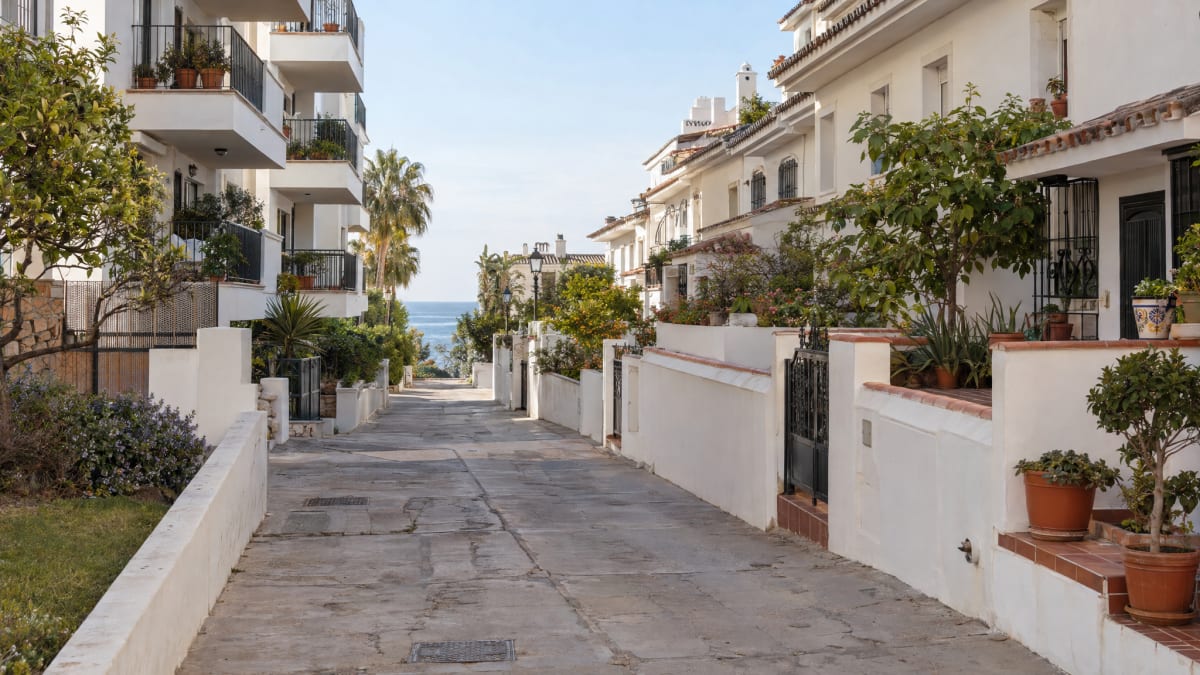
A garden outside your door or a house with no adjoining walls: the differences become practical long before moving day. When you read Costa del Sol listings, the home type helps you picture daily life, but the ownership arrangements tell you who looks after the roof, garden and pool. Here is how to choose between managing more yourself and sharing responsibilities with other owners.
Apartments: ground-floor homes, outdoor space and shared ownership
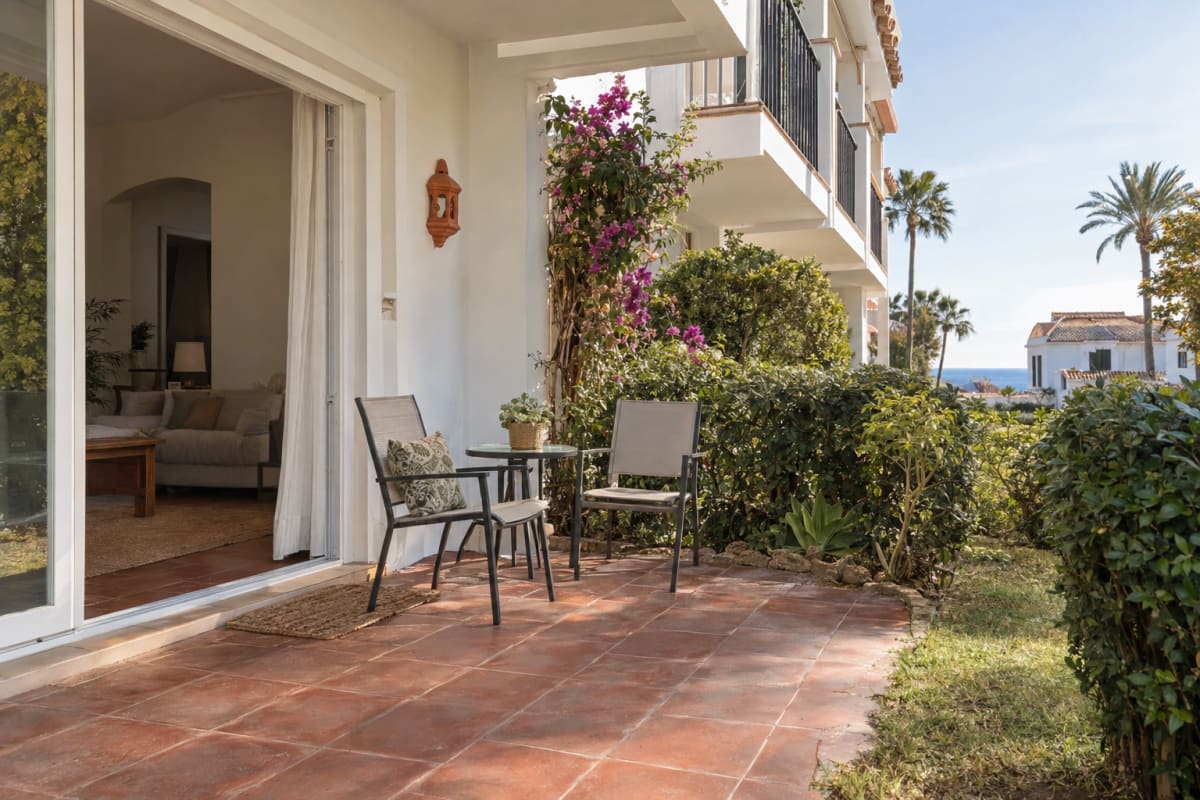
Start with how you want to move through the home. Planta baja means ground floor, a useful distinction when you are considering access between your rooms and outdoor space. Think about how often you will use the entrance, stairs and any lift as part of your ordinary day. For a ground-floor garden or an apartment terrace, ask for the documents showing its ownership and use rights: access directly from your home does not by itself make a communal space exclusively yours. That distinction matters when you are deciding what you can use and what you will maintain. In a shared building, your private home sits alongside jointly owned elements and services. Depending on the building, these can include the entrance, stairs, lift, roof, façades, gardens and pool. Shared upkeep moves some work out of your own hands, while bringing budgets and decisions into the owners’ community. When comparing size, superficie útil is the usable floor area within the enclosing boundaries, excluding partitions, structural supports and certain other occupied or low-height spaces. Superficie construida includes construction elements such as walls and any proportional share of communal areas. Under Andalucía’s housing-information rules, private-use exterior spaces such as terraces contribute half their area to useful area, capped at 10% of the enclosed useful area.

Townhouses and semi-detached homes: adosado and pareado
Choose an adosado if you are looking for the townhouse form: a home joined to neighbouring buildings along two boundary walls. A pareado is semi-detached, joined to another building along one boundary wall. Both types can have one or several storeys, so the label alone does not tell you how many stairs your daily routine will involve. In a residential development, your own front door can coexist with shared gardens, a pool, roads or other services. The useful distinction is between the house itself and the things around it that owners manage together. A development made up of separate buildings or plots can still have an owners’ community, or a grouping of communities, when it shares roads, installations or services. For upkeep, the boundary between private and communal responsibility matters more than the townhouse label. Roofs, façades, gardens and pools may be communal elements, but in terraced and semi-detached homes some can instead belong to individual owners. Before choosing between an adosado and a pareado, ask for the ownership documents and community rules to establish which parts you would maintain yourself and which are funded together.
Villas and country homes: chalet, villa and finca
With a detached house, think first about the outside jobs you are willing to organise. Chalet and villa are words for houses, while aislado identifies the detached arrangement: none of the building’s boundary walls is attached to another building. Where the roof, garden and pool belong to you individually, their upkeep becomes your responsibility rather than a shared building task. That work includes keeping roofs, gutters and rainwater outlets clear, with specialist personnel handling cleaning and maintenance on pitched roofs. A private garden also brings a routine of its own; watering early in the morning or at dusk is recommended. If you will leave the home empty for long periods, closing the water stopcock is a practical part of preparing to go away. Finca has a broader meaning than a country house: it can refer to rural or urban immovable property. When a listing uses finca, ask what buildings, land and annexes the sale actually includes. A country setting and a detached building describe different aspects of the property.
The owners’ community and the home that fits your routine
When a home includes shared property, treat the comunidad de propietarios as part of your buying decision. Under Spain’s horizontal property law, you own your private space and specified annexes while sharing ownership of communal elements and services. The community’s statutes and internal rules can govern those services and everyday use, so the arrangement affects life beyond your front door. The community fee funds general upkeep and services according to participation shares or another specifically established arrangement. Ordinarily, choosing not to use a service does not remove your obligation to contribute. For an apartment, townhouse or villa in a shared development, ask for the current fee, accounts, budget, recent meeting minutes and community rules together, so you can understand both the ongoing commitments and repair decisions. The owners’ meeting approves budgets, accounts and repair works, and the community president must be an owner. Owners must meet at least once a year to approve budgets and accounts, with at least six days’ notice for the ordinary annual meeting. If you are in Scandinavia at the time, you can appoint someone to represent you through a signed written authorisation. Make your final choice around how you will use the home. For stays between longer absences, weigh shared upkeep against the private outdoor work you would organise yourself. For longer periods in residence, consider your daily route through stairs, garden and shared spaces just as carefully as the room count. Take those priorities to your next viewing and discuss how the ownership and maintenance arrangements fit them.


Stay informed on the Costa del Sol
Subscribe to get the latest posts sent to your email
By subscribing, you agree to receive Solkysten’s newsletter by email. You can unsubscribe at any time using the link in each email. How we use your information