
Area Guide
Costa del Sol or Costa Blanca: where everyday life differs
23 June 2026 · 5 min read
Reviewed by Thomas Kjærrgård
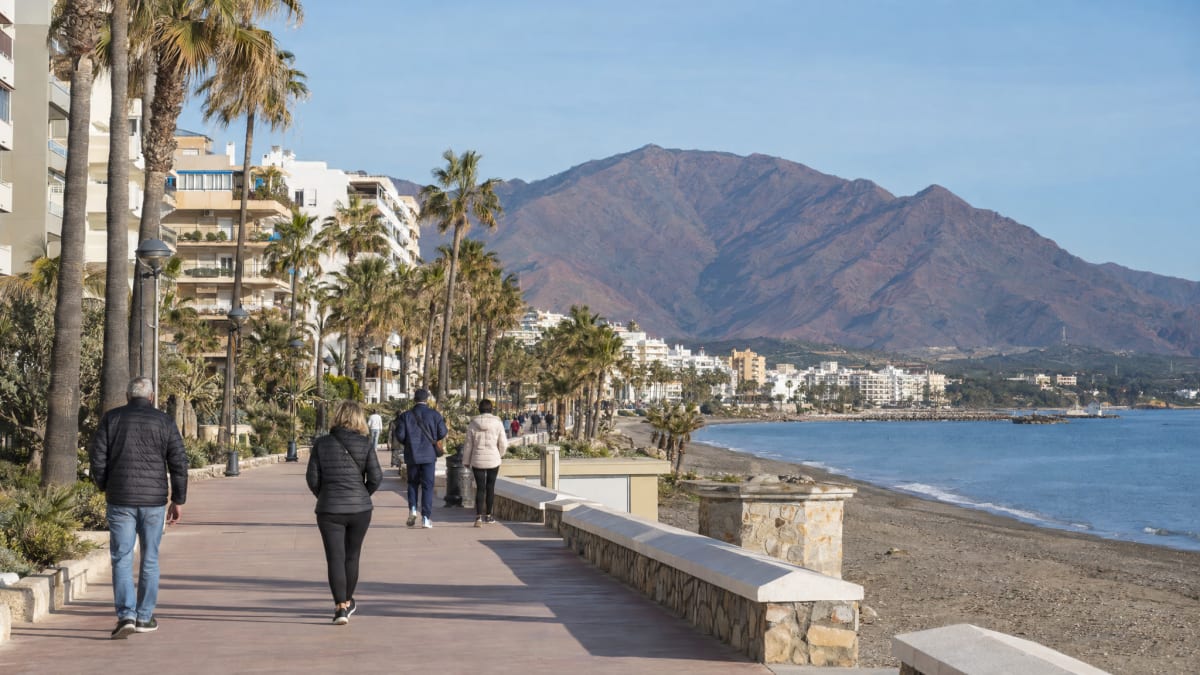
Costa del Sol or Costa Blanca? If you are deciding where to buy in Spain, winter sunshine alone will not settle it. January afternoons average about 17 degrees at both Málaga and Alicante airports, and both have connections to several Nordic cities. The more useful differences are the rainfall, the towns and landscapes you prefer, and how you would spend a Tuesday outside the summer season. Start with those, rather than looking for a winning coast.
Two Mediterranean coasts, with different places to call home
Your everyday setting could be a city neighbourhood, a town with a long promenade or a village above the sea on either coast. The Costa del Sol stretches along more than 150 kilometres of Mediterranean shoreline in Málaga province, in Andalusia. The Costa Blanca lies farther east, in Alicante province in the Valencian Community. On the Costa del Sol, the west includes Manilva, Estepona and Marbella. The central stretch includes Mijas, Fuengirola, Benalmádena, Torremolinos and Málaga, while the east takes you through Rincón de la Victoria, Vélez-Málaga, Torrox and Nerja. Even within one municipality, the choice can be quite distinct: Benalmádena has its hillside Pueblo, the shops and businesses of Arroyo de la Miel, and the seaside Costa. On the Costa Blanca, your shortlist might include Dénia, Jávea, Teulada and Moraira, Calpe, Altea or Villajoyosa, alongside Alicante, Benidorm and Torrevieja. There are seaside villages and coves as well as cities with broad beaches and promenades. Choosing Málaga or Alicante as your starting point is useful, but neither city stands for every kind of home and daily routine along its coast.


Winter temperatures are close, but rainfall differs
For a winter walk or lunch outdoors, the two coasts begin with remarkably similar temperatures. In the long-term airport averages for 1981 to 2010, January brings about 17 degrees in the afternoon and 7 degrees overnight at both Málaga and Alicante. Plan for cool evenings as well as mild afternoons during a winter stay. Spring and autumn are close too. April averages about 21 degrees in the afternoon and 11 degrees overnight at both airports. In October, Málaga averages about 24 degrees by day and 15 at night, compared with about 25 and 15 at Alicante. July and August afternoons average around 30 to 31 degrees at both, with nights around 21 degrees. Rain is the clearer distinction. Málaga averages about 530 millimetres a year, against about 280 at Alicante. Málaga's wettest months are November and December, while Alicante's highest monthly average falls in October. Summers are very dry at both airports. Annual sunshine totals are close, at roughly 2,900 hours in Málaga and 3,000 in Alicante, so the lower rainfall around Alicante does not translate into a large difference in total sunshine.
Getting there from the Nordics and travelling within Spain
If you expect to divide your time between Spain and the Nordics, the route from your home airport belongs near the top of your shortlist. Málaga's airport code is AGP; Alicante's is ALC. Both have listed routes to Copenhagen, Stockholm Arlanda, Oslo Gardermoen, Helsinki, Gothenburg and Billund. Alicante also lists Bergen, Haugesund, Oslo Sandefjord, Stavanger, Trondheim and Keflavík among its Nordic destinations. For a winter home, check the actual timetable from your preferred departure airport for the months you intend to travel. Both cities also have high-speed rail connections with Madrid. In Málaga, trains use María Zambrano station, and local rail lines connect the city with Fuengirola and Álora. High-speed services also connect Madrid with central Alicante, Elche, Orihuela and Villena. If you want to make trips within Spain part of your routine, either coast gives you a rail option as well as an airport.
Landscape, life outside summer and choosing your base
On the Costa del Sol, you can combine the sea with nearby mountain landscapes. Estepona sits between Sierra Bermeja and the coast; Mijas Pueblo is inland from Fuengirola, and the eastern coast includes the cliffs of Maro. For a city routine in Málaga, there is food shopping at Atarazanas market, tapas, museums and seafront walks. Walking in the Montes de Málaga, golf and excursions through mountain villages offer alternatives to beach days outside summer. The Costa Blanca offers its own mix of coast and inland country: coves and seaside old quarters, the castle village of Guadalest, and the mountain landscapes of Sierra de Mariola and Sierra de Maigmó. In Alicante, Mercado Central provides a food-shopping anchor, while the Explanada offers a harbour-side walk. MARQ, MUBAG and MACA give you cultural options away from the beach. Autumn and winter also bring surfing opportunities around Playa de San Juan and Playa de Muchavista. If you want markets, museums and shopping to shape your week, start by comparing Málaga and Alicante themselves. If your preferred day revolves around a promenade, a smaller coastal town may be a better starting point on either coast. The Costa del Sol may suit you if the combination of Málaga, its local rail corridor and nearby mountain villages appeals. The Costa Blanca may suit you if its lower annual rainfall, choice of coves and inland landscapes fit the life you have in mind. We sell homes on the Costa del Sol only. Neither coast needs to lose for the other to suit you: choose a small shortlist on each, then spend time there outside summer, trying the shopping, walks and journeys you would actually use.
Stay informed on the Costa del Sol
Subscribe to get the latest posts sent to your email
By subscribing, you agree to receive Solkysten’s newsletter by email. You can unsubscribe at any time using the link in each email. How we use your information